Introduction
Understanding Predictive Maintenance in Jewellery Manufacturing
Predictive maintenance in jewellery manufacturing refers to
the use of advanced technologies such as sensors, data analytics, and machine
learning algorithms to monitor equipment health and predict potential failures
before they actually occur, allowing businesses to shift from reactive and
preventive maintenance approaches to a more intelligent, data-driven
maintenance strategy that minimizes unexpected breakdowns and ensures
continuous production flow. In jewellery manufacturing units where precision machines
like casting units, polishing machines, laser cutting tools, and CNC-based
equipment are extensively used, even a minor failure can disrupt the entire
production cycle and lead to delays in delivery timelines, increased
operational costs, and customer dissatisfaction, making predictive maintenance
not just a technological upgrade but a critical business necessity for modern
jewellery manufacturers. By continuously collecting data such as temperature,
vibration, usage patterns, and performance metrics from machines, predictive
systems analyze trends and detect anomalies that indicate early signs of wear
and tear, enabling timely intervention and reducing the risk of sudden
equipment failure, which ultimately improves productivity, enhances equipment
lifespan, and ensures consistent product quality across all manufacturing
processes.
Why Equipment Maintenance is Critical in Jewellery Manufacturing
Jewellery manufacturing involves high-precision processes
where machinery plays a crucial role in maintaining quality, accuracy, and
efficiency, making equipment maintenance a vital aspect of business operations
that directly impacts production output and profitability. Traditional
maintenance approaches such as reactive maintenance, where repairs are done
after a breakdown occurs, or preventive maintenance, where servicing is done at
fixed intervals regardless of machine condition, often lead to inefficiencies
such as unnecessary maintenance costs, unexpected downtime, and reduced
equipment lifespan, which can significantly affect business performance in a
competitive market environment. Predictive maintenance addresses these
challenges by enabling manufacturers to perform maintenance activities only
when needed, based on actual machine condition and performance data, thereby
reducing maintenance costs, minimizing downtime, and improving overall
operational efficiency while ensuring that production schedules are not
disrupted and customer commitments are met consistently.
How Predictive Maintenance Works in Manufacturing Equipment
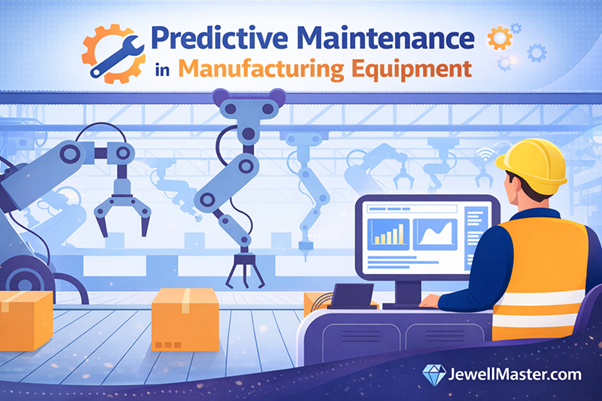
Predictive maintenance systems operate by integrating
sensors and monitoring devices with manufacturing equipment to collect
real-time data related to machine performance, including parameters such as
temperature, vibration levels, pressure, and operational cycles, which are then
analyzed using machine learning algorithms to identify patterns and detect
anomalies that may indicate potential failures. These systems use historical
data combined with real-time inputs to create predictive models that can forecast
when a machine is likely to fail or require maintenance, allowing manufacturers
to take proactive action before the issue escalates into a major problem. For
example, if a polishing machine shows unusual vibration patterns compared to
its normal operating conditions, the system can alert maintenance teams to
inspect and repair the machine before it breaks down completely, thereby
avoiding costly downtime and production delays while ensuring smooth and
uninterrupted manufacturing operations.
Key Benefits of Predictive Maintenance in Jewellery Industry
Predictive maintenance offers significant advantages to
jewellery manufacturers by improving operational efficiency, reducing
maintenance costs, and enhancing overall productivity through data-driven
decision making that ensures machines are maintained at optimal performance
levels. By preventing unexpected equipment failures, manufacturers can reduce
downtime, increase production output, and maintain consistent quality
standards, which are critical for building customer trust and brand reputation
in the jewellery market. Additionally, predictive maintenance helps in
extending the lifespan of machinery by addressing issues at an early stage,
reducing the need for frequent replacements and lowering capital expenditure,
while also improving workplace safety by minimizing the risk of accidents
caused by equipment failure, making it an essential component of modern
manufacturing strategies.
Role of Jewell Master in Predictive Maintenance Management
Jewell Master provides comprehensive tools and features that
support predictive maintenance strategies by enabling jewellery manufacturers
to track equipment usage, monitor maintenance schedules, and analyze
performance data in a centralized system that enhances visibility and control
over manufacturing operations. With features such as equipment tracking,
maintenance logs, service reminders, and reporting dashboards, Jewell Master
allows businesses to maintain detailed records of machine performance and maintenance
history, which can be used to identify patterns and optimize maintenance
planning for improved efficiency and cost savings. By integrating manufacturing
operations with inventory and billing systems, Jewell Master ensures seamless
coordination between production and maintenance activities, helping businesses
achieve higher productivity, better resource utilization, and improved
operational transparency without the need for complex and expensive external
systems.
Challenges Solved by Predictive Maintenance
Jewellery manufacturers often face challenges such as
unexpected equipment failures, high maintenance costs, inefficient resource
utilization, and production delays, all of which can negatively impact business
performance and profitability in a competitive market environment. Predictive
maintenance addresses these challenges by providing accurate insights into
machine health and performance, enabling proactive maintenance planning that
reduces downtime, optimizes resource allocation, and improves production
efficiency while ensuring that machines operate at peak performance levels. By
eliminating guesswork and relying on data-driven insights, predictive
maintenance helps manufacturers make informed decisions that enhance
operational efficiency, reduce costs, and improve overall business performance.
Predictive Maintenance vs Traditional Maintenance Approaches
|
Aspect |
Traditional
Maintenance |
Predictive
Maintenance |
|
Approach |
Reactive /
Scheduled |
Data-driven
predictive |
|
Downtime |
High |
Minimal |
|
Cost
Efficiency |
Low |
High |
|
Equipment
Life |
Reduced |
Extended |
|
Decision
Making |
Manual |
Automated
& intelligent |
Key Features of Predictive Maintenance Systems
- Real-time
machine monitoring using IoT sensors
- Early
fault detection and anomaly identification
- Automated
maintenance alerts and notifications
- Data-driven
maintenance scheduling
- Performance
analytics and reporting dashboards
- Integration
with manufacturing and inventory systems
- Reduced
downtime and improved equipment reliability
Future of Predictive Maintenance in Jewellery Manufacturing
The future of jewellery manufacturing is increasingly driven
by digital transformation and intelligent automation, where predictive
maintenance will play a crucial role in ensuring operational efficiency, cost
optimization, and business scalability in a highly competitive market
environment. As technologies such as artificial intelligence, IoT, and advanced
analytics continue to evolve, predictive maintenance systems will become more
accurate, efficient, and accessible, enabling even small and medium jewellery
manufacturers to leverage these capabilities for improved performance and
growth. With platforms like Jewell Master integrating advanced analytics and
operational management tools, businesses can seamlessly adopt predictive
maintenance strategies that enhance productivity, reduce costs, and ensure
long-term sustainability in an ever-changing industry landscape.
Conclusion
Predictive maintenance is transforming jewellery manufacturing by enabling businesses to move from reactive maintenance strategies to proactive, data-driven approaches that improve efficiency, reduce costs, and enhance overall productivity. By leveraging advanced technologies and intelligent systems, manufacturers can ensure optimal machine performance, minimize downtime, and maintain consistent quality standards, making predictive maintenance an essential component of modern manufacturing operations. Jewell Master empowers jewellery businesses to implement these strategies effectively, providing the tools and insights needed to achieve operational excellence and long-term success in a competitive market.
