Introduction
Understanding Edge Computing in Jewellery Retail
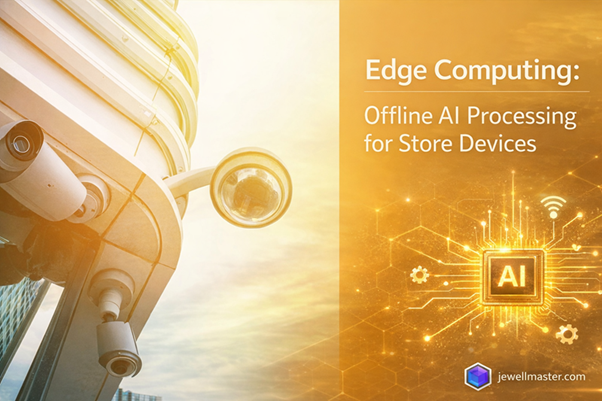
Edge computing in jewellery retail refers to the deployment
of computing resources and artificial intelligence capabilities directly on
local devices such as billing systems, POS machines, RFID scanners, and
surveillance systems, allowing data processing to occur at the “edge” of the
network rather than relying solely on centralized cloud servers, which
significantly improves speed, reliability, and operational efficiency. In a jewellery business environment where real-time decision-making is critical for
billing, inventory tracking, customer interaction, and fraud detection,
depending entirely on cloud-based systems can introduce delays, connectivity
risks, and potential disruptions, especially in locations with unstable
internet connections. Edge computing addresses these limitations by processing
data locally, enabling faster response times, reducing dependency on internet
connectivity, and ensuring that critical business operations continue
seamlessly even during network outages, thereby enhancing operational
resilience and efficiency.
Why Offline AI Processing is Critical for Jewellery Stores
Offline AI processing is critical for jewellery stores
because business operations such as billing, inventory management, customer
verification, and security monitoring require real-time responsiveness and
cannot afford delays or interruptions caused by internet downtime or slow
network speeds. Jewellery stores often operate in high-pressure environments
where customer service speed and accuracy are essential, and any delay in
processing transactions or accessing data can negatively impact customer experience
and sales performance. By enabling AI processing directly on local devices,
edge computing ensures that critical tasks such as fraud detection, customer
recommendations, and inventory updates are performed instantly without relying
on cloud connectivity, thereby improving operational efficiency, enhancing
customer satisfaction, and ensuring business continuity in all scenarios.
How Edge Computing Works in Store Devices
Edge computing works in store devices by embedding
processing capabilities and AI models within local hardware such as POS
systems, smart cameras, RFID readers, and mobile devices, allowing these
devices to collect, analyze, and act on data in real time without sending it to
a central server for processing. These devices are equipped with software that
can run machine learning algorithms locally, enabling them to perform tasks
such as pattern recognition, anomaly detection, and predictive analysis directly
at the source of data generation. For example, a smart camera in a jewellery
store can analyze customer behaviour and detect suspicious activities in real
time without needing to transmit video data to a cloud server, while a POS
system can process billing and inventory updates instantly even if the internet
connection is temporarily unavailable, ensuring smooth and uninterrupted
operations across the store.
Key Benefits of Edge Computing in Jewellery Retail
Edge computing offers numerous benefits to jewellery retailers by improving operational efficiency, reducing latency, enhancing data
security, and enabling real-time decision-making through localized data
processing and intelligent automation. By processing data locally, edge
computing reduces the time required to analyze and act on information, enabling
faster response times and improved customer service, while also reducing
bandwidth usage and dependency on cloud infrastructure, which can lower operational
costs. Additionally, edge computing enhances data security by keeping sensitive
information such as customer data and transaction records within local systems,
reducing the risk of data breaches and unauthorized access, while also ensuring
compliance with data protection regulations and industry standards.
Role of Jewell Master in Edge Computing Integration
Jewell Master plays a crucial role in enabling edge
computing in jewellery retail by providing a flexible and scalable platform
that supports local data processing, real-time analytics, and seamless
integration with store devices, ensuring that businesses can leverage the
benefits of edge computing without disrupting their existing operations. With
features such as offline billing, real-time inventory updates, and local data
storage, Jewell Master ensures that critical business functions continue to operate
smoothly even in the absence of internet connectivity, while also synchronizing
data with cloud systems when connectivity is restored. This hybrid approach
allows businesses to achieve the best of both worlds by combining the speed and
reliability of edge computing with the scalability and accessibility of cloud
computing, ensuring optimal performance and efficiency across all operations.
Challenges Solved by Edge Computing in Jewellery Stores
Jewellery retailers often face challenges such as network
dependency, latency issues, data security risks, and operational disruptions
caused by internet outages, all of which can impact business performance and
customer experience. Edge computing addresses these challenges by enabling
local data processing and reducing reliance on cloud connectivity, ensuring
that critical operations continue without interruption and that data is
processed securely and efficiently. By minimizing latency and improving response
times, edge computing enhances customer interactions, while also providing
greater control over data and reducing the risk of security breaches, making it
an essential technology for modern jewellery retail environments.
Edge Computing vs Cloud-Only Systems
|
Aspect |
Cloud-Based
Systems |
Edge
Computing |
|
Data
Processing |
Centralized |
Local +
distributed |
|
Latency |
Higher |
Very low |
|
Internet
Dependency |
High |
Minimal |
|
Security |
Moderate |
Enhanced
local security |
|
Reliability |
Dependent on
network |
High
reliability |
Key Features of Edge Computing Systems
- Offline
AI processing on local devices
- Real-time
data analysis and decision-making
- Reduced
latency and faster response times
- Enhanced
data security and privacy
- Seamless
integration with cloud systems
- Continuous
operation during network outages
- Improved
efficiency and performance
Future of Edge Computing in Jewellery Retail
The future of jewellery retail is increasingly driven by
intelligent and decentralized technologies such as edge computing, where
businesses will focus on improving speed, reliability, and security through
localized data processing and real-time analytics that enhance operational
efficiency and customer experience. As advancements in hardware and AI
technologies continue to evolve, edge computing systems will become more
powerful and capable of handling complex tasks directly on store devices,
enabling jewellery retailers to leverage advanced analytics, automation, and
personalization without relying heavily on cloud infrastructure. With platforms
like Jewell Master supporting hybrid computing models and seamless integration
with edge devices, jewellery businesses can stay ahead of technological trends
and build resilient, efficient, and future-ready operations that support
long-term growth and success.my
Conclusion
Edge computing is transforming jewellery retail by enabling offline AI processing on store devices, improving speed, security, and reliability while reducing dependency on cloud systems and internet connectivity. By integrating edge computing with Jewell Master, jewellery businesses can achieve seamless operations, enhanced customer experiences, and improved operational efficiency, ensuring that they remain competitive in a rapidly evolving digital landscape. As technology continues to advance, adopting edge computing will be essential for businesses looking to optimize performance, enhance security, and drive innovation in the jewellery industry.
