Introduction
Understanding Quality Control in Jewellery Manufacturing
Quality control refers to the systematic process of
inspecting jewellery pieces at different stages of production to ensure that
they meet predefined design and quality standards. During manufacturing,
jewellery items move through several stages including casting, stone setting,
engraving, polishing, and finishing. At each stage, quality inspectors evaluate
the jewellery piece to ensure that workmanship and materials meet the required
specifications. If a defect is identified, the item may either be rejected or
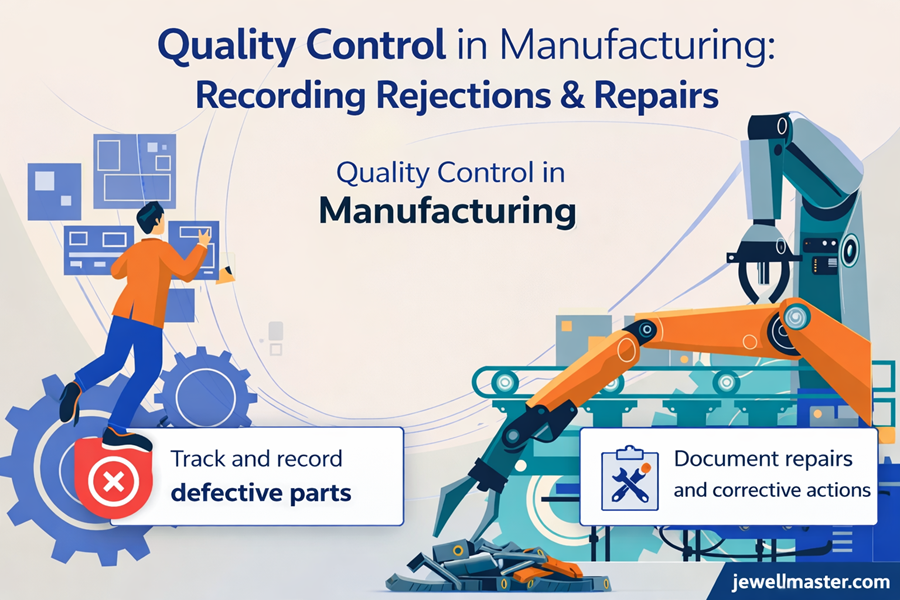
sent for repair depending on the nature of the issue. Recording these quality
checks is essential because it allows businesses to track how frequently
defects occur and identify which production stages require improvement. By
maintaining detailed quality control records, jewellery businesses can maintain
consistent product standards and minimize costly production errors.
Importance of Recording Rejections in Production
Rejections occur when a jewellery piece fails to meet the
required quality standards and cannot be accepted in its current form.
Recording rejected items is important because it provides valuable insights
into production inefficiencies and material wastage. When rejection data is
analyzed regularly, jewellery businesses can identify recurring defects such as
casting imperfections, incorrect gemstone placement, or poor finishing. This
information helps production managers take corrective measures to prevent similar
issues in future manufacturing batches. Proper documentation of rejected items
also ensures that defective jewellery pieces are not mistakenly transferred to
showroom inventory. Instead, rejected items can be melted and recycled to
recover precious metal, reducing material losses and maintaining inventory
accuracy.
Role of Repair Tracking in Jewellery Manufacturing
Not all defective jewellery pieces need to be rejected
entirely. In many cases, defects can be corrected through repair processes such
as stone resetting, polishing corrections, or minor design adjustments. Repair
tracking helps jewellery businesses manage these corrective actions
efficiently. When a defective item is sent for repair, the issue must be
documented along with the repair task assigned to a specific karigar. This
ensures that the repair process is completed properly and that the jewellery piece
meets quality standards before returning to inventory. By maintaining repair
records, jewellery businesses can also monitor the frequency of certain defects
and identify which manufacturing processes require improvement. Over time, this
information helps improve production quality and reduce the number of defective
items.
Common Quality Issues in Jewellery Manufacturing
Jewellery production involves several delicate processes
where even minor mistakes can affect product quality. Identifying these issues
early helps businesses maintain high manufacturing standards and reduce rework
costs.
• Loose or improperly set gemstones
• Surface scratches or polishing defects
• Incorrect metal weight or dimension mismatch
• Casting imperfections or air bubbles
• Misalignment of design elements
• Weak solder joints or structural instability
• Incomplete finishing or rough edges
By tracking these issues systematically, jewellery
manufacturers can improve production processes and reduce quality failures.
How Quality Control Improves Manufacturing Efficiency
Quality control systems not only ensure product excellence
but also improve manufacturing efficiency. When defects are detected early in
the production process, corrective action can be taken before the jewellery
piece moves to the next stage. This prevents defective items from progressing
further through the production workflow, which would otherwise increase repair
costs and delay order completion. Effective quality control also improves
labour productivity because karigars receive feedback on workmanship and can
refine their techniques accordingly. Over time, businesses that maintain
structured quality inspection processes experience fewer production errors and
better resource utilization. Maintaining accurate records of rejections and
repairs helps businesses identify trends that lead to continuous improvement in
manufacturing quality.
Typical Quality Control Workflow in Jewellery Manufacturing
A structured quality control workflow ensures that jewellery
pieces are inspected at multiple stages before reaching the final inventory.
|
Quality
Stage |
Purpose |
|
Casting
Inspection |
Check mould
accuracy and metal purity |
|
Stone Setting
Check |
Verify
gemstone placement and security |
|
Polishing
Inspection |
Ensure smooth
finishing and shine |
|
Structural
Testing |
Confirm
strength of joints and soldering |
|
Final Quality
Review |
Approve
jewellery piece for showroom inventory |
|
Repair
Handling |
Send
defective pieces for correction |
|
Rejection
Recording |
Document
items that cannot be repaired |
This structured inspection process helps jewellery
businesses maintain high quality standards and prevent defective items from
reaching customers.
Benefits of Systematic Rejection and Repair Tracking
Maintaining systematic records of rejected and repaired
jewellery pieces provides several operational advantages. First, it ensures
that quality issues are documented and addressed promptly. Second, businesses
gain insights into production trends that may reveal recurring defects in
specific designs or manufacturing processes. Third, repair tracking helps
reduce wastage because defective jewellery pieces can be corrected instead of
discarded. Another benefit is improved accountability because production teams
become more aware that quality performance is being monitored. Over time,
businesses that maintain detailed rejection and repair records develop stronger
quality management systems that support consistent product excellence.
How Jewell Master Supports Quality Control Management
Jewell Master ERP provides powerful tools for managing
quality control within jewellery manufacturing environments. The platform
allows businesses to record inspection results at different stages of
production and flag jewellery pieces that require repair or rejection. When a
defect is identified, the system logs the issue and assigns repair tasks to the
appropriate karigar or department. Jewell Master also maintains detailed
records of rejected items, including the reason for rejection and the amount of
metal involved. This information helps businesses analyze production quality
trends and identify areas that require improvement. With real-time dashboards
and reporting tools, business owners can monitor rejection rates, repair
activities, and overall production quality. By integrating quality control data
with production and inventory systems, Jewell Master ensures that jewellery
businesses maintain consistent manufacturing standards.
Improving Customer Satisfaction Through Quality Assurance
Quality assurance plays a crucial role in maintaining
customer trust and brand reputation in the jewellery industry. Customers expect
jewellery products to be flawless in design, durability, and finishing. When
businesses implement structured quality control systems, they reduce the
likelihood of defective items reaching the showroom. This not only protects the
brand’s reputation but also reduces the risk of product returns and customer
complaints. By continuously monitoring rejections and repairs, jewellery
businesses can refine their manufacturing processes and ensure that every
jewellery piece meets the highest standards of craftsmanship.
Conclusion
Quality control is a fundamental component of jewellery manufacturing because it ensures that every jewellery piece meets strict design and craftsmanship standards. Recording rejections and repairs helps businesses identify production issues, reduce wastage, and maintain accurate inventory records. Without structured quality management systems, jewellery manufacturers may struggle to maintain consistent product quality and operational efficiency. Modern ERP platforms such as Jewell Master provide powerful tools that automate quality inspection records, track repair processes, and analyze rejection trends. By integrating quality control with production and inventory systems, jewellery businesses can maintain superior manufacturing standards and deliver products that meet customer expectations. Effective quality control ultimately strengthens both operational efficiency and brand reputation within the competitive jewellery market.
