Introduction
Understanding Metal Purity in Jewellery Manufacturing
Metal purity refers to the proportion of pure precious metal
present in a jewellery alloy. In gold jewellery, purity is typically measured
in karats such as 24K, 22K, or 18K, each representing different percentages of
pure gold combined with other metals like copper or silver. Alloying is
necessary because pure gold is too soft for everyday jewellery and requires
additional metals to increase strength and durability. During manufacturing,
metal may pass through multiple melting and casting processes where alloy
composition may be adjusted to achieve the desired purity. Maintaining accurate
purity records ensures that jewellery pieces meet quality standards and comply
with regulatory requirements. Proper documentation also helps jewellery
businesses calculate correct product value and maintain transparency in metal
inventory management.
Why Metal Purity Tracking is Important
Tracking metal purity during manufacturing is essential
because jewellery value depends not only on weight but also on the purity of
the metal used. When purity levels change during casting or refining processes,
the financial value of the metal inventory also changes. Without proper
documentation, businesses may face discrepancies between recorded metal weight
and actual gold value. Accurate purity tracking ensures that the correct amount
of pure metal is accounted for at every stage of production. It also helps
businesses maintain compliance with hallmarking standards and quality
certification requirements. By recording purity changes systematically,
jewellery manufacturers can maintain accurate production records and protect
their inventory value.
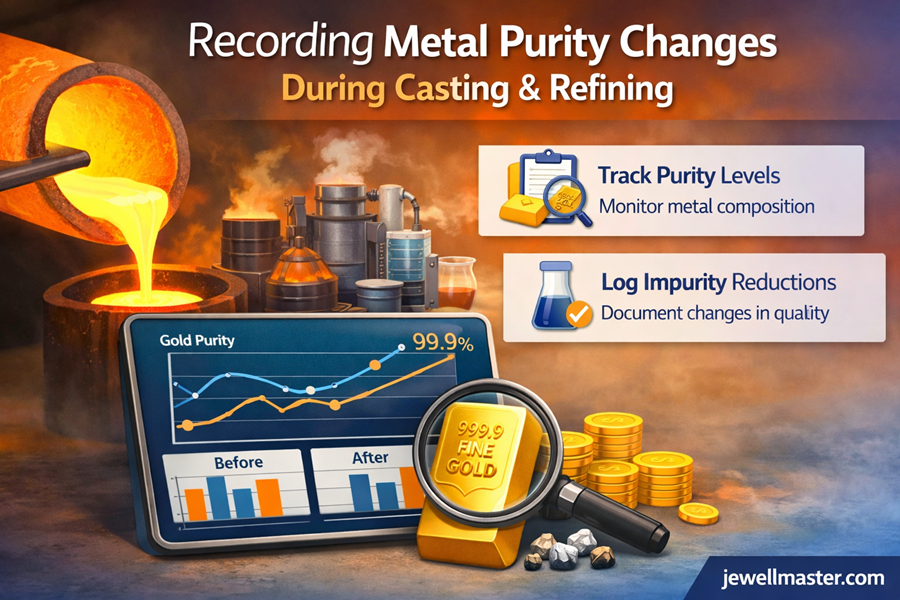
How Casting and Refining Affect Metal Purity
Casting and refining processes involve melting metal at high
temperatures and reshaping it into moulds to create jewellery components.
During casting, alloy composition may be adjusted by adding other metals to
achieve the required hardness and colour. Similarly, refining processes may
remove impurities from scrap metal and restore higher purity levels. These
processes can slightly alter the original metal composition, making it
necessary to record purity levels after each stage of production. Without proper
monitoring, repeated melting and alloy adjustments may lead to inaccurate
purity estimates. Recording these changes ensures that jewellery manufacturers
maintain precise control over the metal composition used in their products.
Common Situations Where Purity Changes Occur
Jewellery production involves several scenarios where metal
purity may change due to manufacturing processes or material recovery
activities.
• Mixing alloys during gold melting and casting
• Adding strengthening metals such as copper or silver
• Recovering scrap metal during refining operations
• Recycling defective jewellery pieces through melting
• Removing impurities during metal purification
• Adjusting metal composition for specific jewellery colours
• Refining gold dust or polishing residue collected from workshops
Monitoring these situations helps jewellery businesses
maintain accurate metal composition records and prevent inventory
discrepancies.
Challenges of Recording Purity Changes Manually
Many jewellery businesses still rely on handwritten
registers or spreadsheets to record metal purity changes during production.
While these methods provide basic documentation, they often lack the precision
required for accurate metal accounting. Manual records may contain incomplete
data or calculation errors, especially when multiple melting and refining
cycles occur. Another challenge arises when scrap metal from different sources
is melted together, making it difficult to determine the exact purity level of
the resulting alloy. Without structured digital systems, jewellery businesses
may struggle to reconcile production records with inventory values. Over time,
these inaccuracies can create financial discrepancies and complicate auditing
processes.
Typical Workflow for Tracking Purity During Production
A structured workflow ensures that metal purity is recorded
consistently at different stages of jewellery manufacturing.
|
Production
Stage |
Purpose |
|
Raw Metal
Entry |
Record
initial purity and weight of metal |
|
Alloy
Preparation |
Adjust metal
composition for design requirements |
|
Casting
Process |
Melt and cast
metal into jewellery components |
|
Purity
Testing |
Verify metal
composition after casting |
|
Refining
Process |
Remove
impurities and recover precious metal |
|
Purity
Adjustment |
Record
updated purity levels |
|
Inventory
Update |
Update metal
records with accurate purity data |
This structured workflow helps jewellery businesses maintain
transparency in metal composition throughout the manufacturing process.
Benefits of Structured Purity Tracking
Maintaining accurate records of metal purity provides
several operational advantages for jewellery businesses. First, it ensures that
the financial value of metal inventory is calculated correctly because purity
levels directly influence metal valuation. Second, structured purity tracking
improves production transparency by documenting how metal composition changes
during manufacturing processes. Third, accurate purity records help businesses
maintain compliance with hallmarking regulations and quality certification
requirements. Additionally, purity tracking helps manufacturers monitor alloy
usage and optimize material recovery during refining operations. Over time,
jewellery businesses that maintain detailed purity records achieve better
control over inventory management and production efficiency.
How Jewell Master Records Metal Purity Changes
Jewell Master ERP provides specialized tools for tracking
metal purity throughout the jewellery manufacturing process. The system allows
businesses to record the initial purity of raw metal when it enters inventory
and monitor changes during casting and refining stages. When metals are melted
or alloy compositions are adjusted, the system records updated purity levels
along with production batch information. Jewell Master also integrates purity
tracking with inventory and costing modules, ensuring that metal valuation
reflects both weight and purity accurately. Detailed reports generated by the
system allow business owners to analyze purity changes across different
production cycles. By automating these processes, Jewell Master helps jewellery
manufacturers maintain accurate metal accounting and improve production
transparency.
Ensuring Compliance with Hallmarking and Quality Standards
Hallmarking regulations require jewellery products to meet
specific purity standards that are verified through certification processes.
Maintaining accurate records of metal purity during manufacturing helps
jewellery businesses demonstrate compliance with these regulations. When purity
data is recorded systematically, businesses can provide documentation that
verifies the composition of their jewellery products. This not only protects
consumer trust but also strengthens brand reputation within the jewellery
market. Digital purity tracking systems also make it easier for businesses to
prepare audit reports and maintain regulatory compliance.
Conclusion
Recording metal purity changes during casting and refining is a crucial aspect of jewellery manufacturing management. Because the value of jewellery depends on both metal weight and purity, maintaining accurate purity records ensures financial transparency and production accuracy. Manual record-keeping methods often struggle to capture the complexity of purity changes during manufacturing processes. Modern ERP systems such as Jewell Master provide advanced tools that automate purity tracking and integrate metal composition data with inventory and costing systems. By implementing structured purity monitoring processes, jewellery businesses can maintain accurate inventory valuation, improve regulatory compliance, and ensure consistent product quality. This level of precision ultimately strengthens operational efficiency and customer trust in the jewellery brand.
